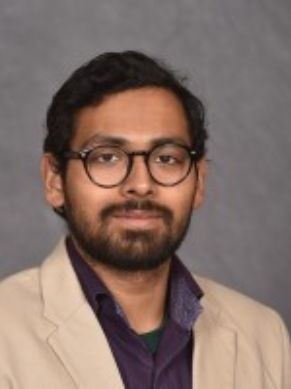
Presented by Rabayet Sadnan
Pacific Northwest National Laboratory
Wednesday, April 29 • 10-11 AM
Abstract
Modern electric distribution systems are transforming into ultra-large-scale systems-of-systems, presenting unprecedented computational challenges in coordinating millions of decision variables across multiple temporal and organizational scales to reliably extract grid services from flexible grid-edge resources. The proliferation of distributed energy resources (DERs) at the network periphery, combined with an increasingly complex web of interacting stakeholders—DSOs coordinating with TSOs/ISOs, DER aggregators and owners with heterogeneous objectives, and emerging aggregator-to-wholesale-market pathways bypassing direct DSO visibility—materially increases operational uncertainty and computational complexity. Distribution-level flexibility has become central to resource adequacy, resilience, and affordability, providing critical services during normal operations and extreme events. Additionally, the temporal coupling introduced by storage and other stateful assets further compounds these challenges by extending problem horizons across multiple timescales. Addressing these imperatives necessitates advanced decomposition techniques, parallel computing frameworks leveraging high-performance computing architectures, and novel algorithmic approaches capable of tractably solving ultra-large-scale problems while maintaining solution quality—critical capabilities for enabling the grid flexibility, affordability, and resilience required in our rapidly evolving energy landscape.
Bio
Dr. Rabayet Sadnan is working as a research scientist in the Power System Modeling Group at Pacific Northwest National Laboratory (PNNL), where he has been contributing to cutting-edge power systems research since 2023. He received his B.Sc. and M.Sc. degrees in Electrical Engineering from the Bangladesh University of Engineering and Technology (BUET) in 2015 and 2017, respectively, followed by an M.Sc. in Mathematics and a Ph.D. in Electrical and Computer Engineering from Washington State University in 2021 and 2023. His research focuses on scalable mathematical optimization, distributed control and coordination methods, and power system modeling and analysis, with applications spanning distribution system optimization, energy storage control, grid resilience and recovery, and standards-based model interoperability. Dr. Sadnan also served as an Adjunct Faculty member at the University of Connecticut (UConn).