Current Projects
An Equitable, Affordable & Resilient Nationwide Energy System Transition (EARNEST)
This project addresses fundamental innovations to manage disruptions due to extreme weather events in the electric power grid to integrate disparate modeling, planning, and decision-making strategies for long-term grid resilience. We propose three closely interwoven thrusts to address the challenges mentioned earlier.
Dates: 9/2023 – 8/2026
Source of Support: Dept. of Energy/Stanford University
Award: $2,000,000
PI: Dr. Mani V. Venkatasubramanian
Dates: 9/2023 – 8/2026
Source of Support: Dept. of Energy/Stanford University
Award: $2,000,000
PI: Dr. Mani V. Venkatasubramanian
CAREER: Enabling Operational Resilience in Decentralized Electric Power Distribution Systems
This project aims at developing operational solutions for power distribution systems to ensure resilience in the aftermath of an extreme weather event. The project mostly focuses on the islanded operation of the electrical power grid during a disaster and develops engineering and research solutions to allow for a stable operation and explore model-based optimization solutions.
Dates: 02/2020 – 01/2025
Source of Support: National Science Foundation
Award: $500,638
PI: Dr. Anamika Dubey
Dates: 02/2020 – 01/2025
Source of Support: National Science Foundation
Award: $500,638
PI: Dr. Anamika Dubey
DOE UI-ASSIST
The consortium is conducting cutting-edge collaborative research that will allow a c continued increase of renewable energy penetration into our electric distribution grid. Thirty academic institutes, R&D organizations, utilities, industries and policy makers from India and US are working together on basic research activities, laboratory and real-world demonstrations.
PI: Dr. Noel Schulz
PI: Dr. Noel Schulz
NSF FW-HTF
Enabling Power Grid Resiliency: Effective decision-making by power grid operators in extreme events depends on operator knowledge and decision support tools. This project will integrate principles from cognitive science, and machine learning. cybersecurity, and power engineering to develop tools and augment operators for better performance.
PI: Dr. Anurag Srivastava
PI: Dr. Anurag Srivastava
Oscillation Monitoring System for RTE
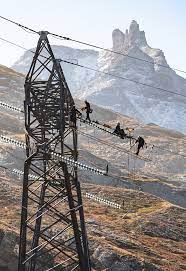
Large-scale Integration of renewables in power grids is introducing complex stability issues such as wide-area oscillations. WSU is developing and implementing synchrophasor-based real-time oscillation monitoring system for RTE France in a project funded by PSERC and RTE.
PI: Dr. Mani V. Venkatasubramanian
PI: Dr. Mani V. Venkatasubramanian
Mitigating Operational Security Vulnerabilities
Grid integration of massive amounts of inverter-based resources poses challenges to the protection systems and grid synchronization stability y of inverter-based resources. This project sponsored by PSERC seeks to identify and mitigate such vulnerabilities.
PI: Dr. Saeed Lotfifard
PI: Dr. Saeed Lotfifard

GRIDCLOUD: Cloud Exchange of Data among Control Centers
This project, funded by PSERC and ISONE, demonstrates that real-time measurement data can be securely exchanged among control centers with latencies under 100ms, which can enable wide-area closed-loop stability controls.
PI: Dr. Anjan Bose
PI: Dr. Anjan Bose
NSF CAREER
Resilience in Distribution Systems: This project aims to manage distribution systems efficiently to improve operational resilience. The innovations add flexibility for island formation and bottom-up restoration using distributed energy resources and enhanced distribution automation capabilities, allowing for fast recovery during natural disasters.
PI: Dr. Anamika Dubey
PI: Dr. Anamika Dubey